
Retirement Planning in Tampa Bay & Wesley Chapel, FL
Turn what you've saved into income that lasts, with a retirement plan built around your life in Tampa Bay, not a one-size-fits-all template.
Specific topics covered
Accumulation and Distribution
The two phases of retirement planning, building the asset base, then turning it into income that lasts.
Annuities Review
An honest second look at the annuity you already own, and whether it's still the right tool for the plan.
401(k) Rollover After a Job Change
Changed employers? Don't leave your 401(k) behind. Here are your four options and how to choose.
You spent decades building the pile. The hard part, the part almost nobody prepares you for, is turning it into a paycheck that lasts as long as you do. That is what retirement planning in Tampa Bay is really about, and it is the conversation we have every day with families and business owners across Wesley Chapel and the wider Tampa Bay area.
If you are within about five years of retirement, generic advice stops being enough. Your Social Security timing, your tax bracket, the order you tap your accounts, and the market’s behavior in your first few years all start to matter in ways they never did while you were simply saving. Get those decisions right and your money can outlast you. Get them wrong and you can hand years of income to taxes and bad timing you never needed to lose.
Retirement planning built around you, not a template
There is no single right retirement plan, and anyone who hands you one before understanding your situation is selling a product, not advice. As your retirement advisor, my job is to understand your income, your goals, your tax picture, and your family, and then build a plan that fits only you.
Whether you are in Wesley Chapel, Lutz, Tampa, Lakeland, or anywhere across Tampa Bay, we can meet in person at the Wesley Chapel office or virtually, whatever works for your life. If you have been searching for a retirement advisor near me and want a straight answer instead of a sales pitch, that is exactly the conversation to have.
The Florida retirement advantage most people underuse
Florida gives retirees a real head start: no state income tax on Social Security, pensions, IRA withdrawals, or 401(k) distributions. That single fact changes the math on Roth conversions and the order you draw down your accounts compared with the high-tax state many Tampa Bay retirees moved from. Used well, it can mean keeping thousands more of your own money every year.
But the advantage only pays off if your plan is built to capture it. The years right after you retire, when your earned income drops but before required distributions begin, are often the lowest-tax years of your life, and Florida residency makes that window even more valuable. That is the time to convert pre-tax savings to Roth, take gains at favorable rates, and lock in tax-free income for later. Miss it, and you hand back part of the very advantage that brought you here. Coordinating that timing, alongside Social Security and healthcare costs, is a core part of the retirement tax planning we do for Tampa Bay families.
What retirement planning with Mike actually covers
A real plan connects the pieces most people handle in isolation. Instead of a pile of separate accounts and a hope that it works out, you get one coordinated strategy:
- Retirement income planning and distribution: turning your 401(k), IRA, and savings into a dependable monthly paycheck, drawn in the order that minimizes your lifetime tax bill rather than just this year’s.
- 401(k) and IRA rollovers: deciding what to do with old employer plans when you retire or change jobs, without triggering an avoidable tax hit or losing the Rule of 55.
- Annuity review: an honest second opinion on whether an annuity you already own, or one you are being pitched, actually belongs in your plan.
- Social Security timing: modeling claiming ages for both spouses, including survivor income, so you do not leave guaranteed money on the table.
- Retirement tax planning: using the low-tax years between retirement and required minimum distributions for Roth conversions and smart withdrawals.
- Healthcare and long-term care: a realistic line item for Medicare, IRMAA brackets, and the care scenario most plans quietly ignore.
You do not have to understand all of this on day one. That is what we are for. You bring the goals; we handle how the pieces fit together.
The five years that make or break retirement
There is a window, roughly five years on either side of your retirement date, where the highest-leverage decisions get made: catch-up contributions, Roth conversion strategy, when to claim Social Security, and how to structure your first withdrawals. Decisions made here compound for the rest of your life.
If you are planning an early retirement, that window opens sooner and the stakes are higher, because your savings have to stretch further and you may be bridging years before Social Security and Medicare begin. This is precisely where a financial advisor for early retirement earns their keep, mapping the gap years so an early exit does not quietly become a costly one.
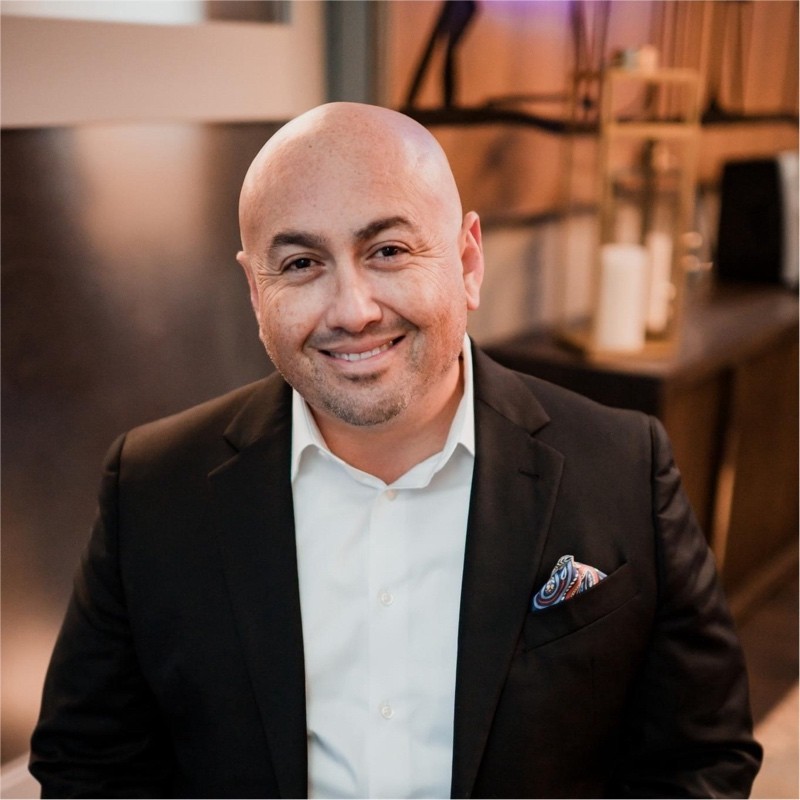
The most overlooked opportunity I see is the stretch of years between the day you stop working and the year your first required distribution hits. Earned income drops, RMDs have not started, and your tax bracket may never be lower again. That is the sweet spot for Roth conversions and tax-smart withdrawals, and it usually closes before people realize it was open. If you are near that window, let's run your actual numbers together.
How we build your retirement plan
Working together is straightforward, and it starts with a conversation, not a commitment:
- A free 30-minute call. We talk through where you are, what you are working toward, and whether it makes sense to keep going. No pitch, no homework.
- A gap analysis. What you are likely to spend, what your guaranteed income (Social Security, pensions) will cover, and the gap your portfolio has to fill.
- A written plan. Income sequencing, tax strategy, Social Security timing, and a real healthcare reserve, in plain English you can actually act on.
- Ongoing reviews. Tax law, RMD ages, and your own life will shift. We adjust the plan so it keeps doing what you intended.
At every step you will know what we are doing and why. If working together is not the right fit, I will tell you and point you somewhere that is.
Why Tampa Bay families choose Mike Garcia
When the topic is your family’s money, credentials and character both matter. Mike Garcia holds the AAMS designation, Series 7 and Series 66 securities licenses, and a 2-15 insurance license, and moved into financial services in 2018 after more than 20 years of owning and operating his own businesses. That range means your investments, retirement income, estate plan, and insurance are coordinated under one roof instead of handed off.
It also shows in how people respond: a 5.0 rating from 39 Google reviews from Tampa Bay families and business owners, and a steady stream of referrals. Securities and advisory services are offered through BRIA Capital Group. You can read more about Mike’s background, verify his record independently, and decide for yourself.
If you are thinking seriously about retirement in Wesley Chapel, Tampa, or anywhere across Tampa Bay, the best next step is a simple one. Book a free 30-minute retirement planning consultation, and let’s find out whether your savings are on track to become the income you are counting on.
Retirement Planning FAQs
Do I need a financial advisor for retirement?
Not everyone does, but the closer you get to retirement, the more the decisions compound. Social Security timing, withdrawal order, Roth conversions, and healthcare costs interact in ways that are easy to get wrong and expensive to undo. A retirement advisor helps you make those calls with your actual numbers instead of a rule of thumb. The first conversation is free, so it costs nothing to find out whether you'd benefit.
When should I start retirement planning?
The highest-leverage window is roughly five years on either side of your retirement date, but earlier is always better. In your 20s to 40s it's about saving and capturing the employer match; as you approach retirement it shifts to tax strategy, Social Security timing, and building a withdrawal plan. If you're within ten years of retiring in Tampa Bay, now is the right time to build the plan.
What questions should I ask a retirement advisor?
Ask whether they're a fiduciary, how they're paid, and whether they coordinate taxes, Social Security, and healthcare or only manage investments. Ask who their typical client is, and ask them to explain their recommendation in plain English. If the answers are vague, keep looking.
Do you only work with people in Wesley Chapel?
No. The office is in Wesley Chapel and we work with families in person across Tampa Bay, including Tampa, Lutz, Lakeland, and Ocala, and virtually with clients throughout Florida and beyond. Where you meet matters less than getting the plan right.
How are you paid?
Fees are transparent and discussed up front. Depending on the engagement that may be a flat planning fee, an asset-based advisory fee, or commission on certain insurance products. You'll always know what you're paying, and why, before anything is signed.
What is the average cost of retirement planning?
For a one-time written retirement plan, flat fees generally land in the low thousands depending on complexity. For an ongoing relationship where the advisor also manages the portfolio, roughly 1% of assets per year is the most commonly cited figure, usually on a sliding scale that drops as the balance grows. Hourly engagements are typically $200 to $400. Ask for the number as both a percentage and a dollar amount, and ask what fund expense ratios sit on top of it.
How much money do you need to retire comfortably in Florida?
There is no single number, because it depends entirely on the monthly spending you expect. What is specific to Florida is the mix of costs: no state income tax on your withdrawals, which helps, set against property insurance that has risen sharply, flood coverage where it applies, and CDD fees in many newer communities. The better approach is to build the actual budget first, then work backward to the portfolio, Social Security timing, and withdrawal order that support it.
What is the $1,000 a month rule for retirees?
It is a rough shorthand that says you need about $240,000 saved for every $1,000 a month you want to draw in retirement, which works out to a 5% withdrawal rate. Treat it as a back-of-envelope sanity check, not a plan. It ignores taxes, Social Security, inflation, healthcare costs before Medicare, and the order you draw from your accounts, and any of those can move the real number substantially.
Have questions about retirement planning?
A 30-minute call to talk through your situation, no pitch, no obligation.